

An Examination of Assumed Properties of Child Sexual Abuse Based on Nonclinical SamplesPaper presented to the symposium sponsored by the Paulus Kerk, Rotterdam, The Netherlands, on the 18th of December 1998
Bruce Rind, Ph.D., Department of Psychology Temple University, Robert Bauserman, Ph.D. Department of Health and Mental Hygiene, State of Maryland & Philip Tromovitch, Ph.D. (cand.) Graduate School of Education, University of Pennsylvania
In America, starting in the mid-1970s, mental health care professionals, politicians, law enforcement personnel, the media, and the lay public began paying considerable attention to child sexual abuse, which we’ll often refer to in this talk as "CSA" for short. Eventually, this concern spread to other countries around the world, including Holland. Much of the attention paid to CSA has focused on its possible effects on psychological adjustment. The media, the popular press, and the professional literature have all generally portrayed CSA as a particularly traumatic experience, as a "special destroyer of adult mental health." For example, in the top journal in America for clinical psychology, the authors of a recent article asserted that "child sexual abuse is a traumatic event for which there may be few peers," by which they are essentially saying that virtually nothing could be worse for a young person than to have this experience. Some in the mental health field have even attempted to explain much or all of adult psychopathology as a consequence of CSA. The common view that has emerged over the past two decades is that CSA has certain basic properties:
In this view, these properties hold whether we’re talking about patients in therapy (that is, clinical samples), or people not in therapy (that is, nonclinical samples). Our research over the past few years has focused on examining these assumed basic properties of CSA. The question that we have asked, and that we will attempt to answer in this presentation, is: For people who have experienced CSA, does the experience cause intense psychological harm on a widespread basis for both genders? Before we describe our research, it is important to discuss terminology. The term child sexual abuse has been used in the psychological literature to describe virtually all sexual interactions between children or adolescents and significantly older persons, as well as between same-age children or adolescents when coercion is involved. The indiscriminate use of this term and related terms such as victim and perpetrator has been criticized by various researchers because of concerns about scientific validity. As one researcher noted, researchers have often failed to distinguish between "abuse" as harm done to a child or adolescent and "abuse" as a violation of social norms, which is a problem because it cannot be assumed that violations of social norms lead to harm. As another researcher observed, our society has tended to equate "wrongfulness" with harmfulness in sexual matters, but harmfulness cannot be inferred from wrongfulness. Still another researcher argued that the indiscriminate use of terms suggesting force, coercion, and harm reflects and maintains the belief that these interactions are always harmful, which interferes with objectively appraising them. In earlier research, we demonstrated experimentally that people who read scientific reports of nonnegative sexual interactions between adolescents and adults are biased by the use of negatively-loaded terms such as child sexual abuse. Problems of scientific validity of the term child sexual abuse are perhaps most apparent when contrasting cases such as the repeated rape of a 5-year-old girl by her father, which undoubtedly produces serious harm, and the willing sexual involvement of a mature 15-year-old adolescent boy with an unrelated adult, which, although violating social norms, may have no implications for harm. By classifying these two very dissimilar events into the single category of child sexual abuse, a scientifically valid understanding of each is threatened. With these caveats in mind regarding the shortcomings of the term child sexual abuse, we will nevertheless continue to use it in our talk because it is so pervasively used by the authors of the studies we examined. We will, however, return to a discussion of the validity of this term later in our presentation after we have presented our data and analyses. Having said that, based on typical current use of the term CSA, it will be defined as a sexual interaction involving either physical contact or no contact (for example, exhibitionism) between either a child or adolescent and someone substantially older, or between two peers who are children or adolescents when coercion is employed. Previous Literature ReviewsIn America, starting at the end of the 1970s, researchers began in earnest examining the psychological correlates of CSA. Soon, numerous such studies had been published. This in turn occasioned a new kind of research, which consisted of reviewing and synthesizing the available studies--that is, conducting literature reviews. Many literature reviews have appeared over the last 15 years. These reviews have not been unanimous in their conclusions, although a good many of them have favored the assumptions of causality, pervasiveness, intensity, and equivalence of harm, thus supporting popular impressions of CSA. Two basic types of reviews have been done: qualitative and quantitative. We’ll examine each type now. Qualitative Literature ReviewsThe first type of review is qualitative, in which a researcher gathers a set of studies and summarizes in narrative fashion what they seem to be saying. The researcher tells the reader in words and descriptions, rather than mathematically, his or her interpretation of the findings of the studies taken as a whole. The authors of these qualitative reviews have typically concluded that CSA is associated with a wide range of psychological problems, including anger, depression, anxiety, eating disorders, alcohol and drug abuse, low self-esteem, relationship difficulties, inappropriate sexual behavior, aggression, self-mutilation, suicide, dissociation, and posttraumatic stress disorder, among others. They more often than not have assumed that CSA caused these problems, and have stated or implied that most persons with CSA experiences will be afflicted. Some have taken pains to emphasize that boys are just as badly affected as girls. One group of researchers called it a myth that boys are less affected than girls. Another researcher dismissed as an "exercise in futility" efforts to determine whether boys or girls are more adversely affected by CSA, and concluded that CSA "has pronounced deleterious effects on its victims, regardless of their gender." Not all reviewers, however, have agreed with these conclusions. Some have pointed to the need for caution when inferring causality, noting that CSA is so consistently confounded with family environment problems that it really is not possible to say whether the poorer adjustment found in CSA subjects compared to control subjects is the result of the CSA or poor family background. A number of reviewers have argued that CSA outcomes are variable, rather than pervasively negative. For example, Constantine, in one of the earliest reviews, found that negative outcomes were often absent in CSA persons in nonclinical samples. He concluded that there is no inevitable outcome or set of reactions, and that responses to CSA are mediated by nonsexual factors, such as the young person’s perceived willingness when participating in the sexual encounter. And finally, a few reviewers have noted that boys tend to react much more positively or neutrally than girls. Limitations of Qualitative Literature Reviews What can we conclude from the qualitative literature reviews as a whole regarding popular assumptions about CSA? Not much, actually, for several reasons. First, their conclusions have been inconsistent from one review to the next. Second, and even more importantly, these reviews have generally suffered from sampling biases and third, they have been vulnerable to biases stemming from subjectivity and imprecision. Sampling biases. All of these qualitative reviews except for one (which we’ll discuss later in this presentation) were based primarily on clinical or legal samples. A fair number of them were based exclusively or nearly exclusively on these samples. Clinical and legal samples of persons with CSA cannot be assumed to be representative of the population of persons with a history of CSA. This is an extremely important principle that is worth elaborating on. "Proof" that masturbation caused mental disease was once based on observing that institutionalized psychiatric patients masturbate. "Proof" that homosexuality was a mental disorder was once based on psychiatric and prison samples. When nonclinical samples were examined, a much different and much more benign view of masturbation and homosexuality emerged. By analogy, we must also examine CSA in nonclinical populations to be able to infer whether it is generally harmful, and if so, to what degree. Some reviews of CSA have been based on a large number of clinical samples, emboldening the reviewers to conclude that CSA is highly destructive. But bigger numbers do not necessarily bring us closer to valid knowledge. To see why, consider this famous example. In 1936 in the U.S., the Republican candidate Alf Landon ran against the Democrat candidate Franklin Roosevelt for president. Two weeks before the election, Literary Digest magazine sent out 12,000,000 postcards asking people whom they would vote for. They got 2,500,000 responses, voting 57% for Landon and 43% for Roosevelt. The actual election produced just the opposite results. What went wrong? The magazine got its sample from car registrations and telephone directories. In 1936, during the height of the depression, people with cars and phones were likely to have had money, and such people tend to be Republicans. Thus, their sample was biased. The fact that they got such a huge number of responses (2.5 million) did not compensate for sample bias. A representative sample of 1000, which is typically used today, is far better at reaching valid results. The principle is, sample size will never compensate for sample bias. The findings of 150 clinical studies are not nearly as informative as the findings of one representative study. The focus on clinical and legal samples represents a major failing of most qualitative reviews. Drawing conclusions from clinical and legal samples is problematic not only because these samples are not representative of the general population, but also because data coming from these samples are vulnerable to being invalid. One problem has to do with the beliefs of the therapist. If a therapist is convinced, as many once were, that homosexuality causes maladjustment, then the therapist will be unmotivated to search for other potential causes of a homosexual patient’s maladjustment. In this way, the therapist’s belief of pathology is maintained. The same argument can be applied to CSA. In one famous example of this, psychiatrist Fred Berlin evaluated the president of American University, who had just been arrested for making obscene phone calls. Berlin heard from his patient that he had incest with his mother at age 11, but also that he had been severely beaten at random times repeatedly throughout his entire childhood. Berlin, convinced as he was in the power of CSA to create pathology, fixated on the incest as the cause of his patient’s current problems, and then used this case as just another example of how devastating CSA is. But, given the confound of much more prominent and pervasive physical abuse, his conclusions seem dubious at best. The point of this example is that the psychiatrist’s beliefs in the harmfulness of CSA were strengthened by selective attention to evidence, which is not scientifically valid. This is not to argue that CSA is never the cause of a patient’s maladjustment, but that a therapist’s expectancies can substantially inflate the perception that CSA causes maladjustment.
Subjectivity and imprecision. Qualitative reviews are entirely narrative and therefore susceptible to the reviewers' own subjective interpretations. Reviewers who are convinced that CSA is a major cause of adult psychopathology may fall prey to confirmation bias--that is, they note and describe study findings indicating harmful effects, but ignore or pay less attention to findings indicating nonnegative or positive outcomes, thus confirming their initial belief. By analogy, people who believe in astrology are very impressed when their horoscope’s prediction comes true, but quickly forget the vast majority of cases when it doesn’t. By means of this confirmation bias, they are convinced in the predictive validity of astrology. An example of confirmation bias in CSA research is that of Mendel, who reviewed a study consisting of two separate college samples of males. In one sample, no associations were found between CSA and adjustment problems. In the second, smaller sample, some associations were found. Mendel ignored the results from the first sample, but used the second to argue that CSA causes maladjustment. This selective attention to confirming results has been a serious problem in many of the qualitative reviews. Another problem has to do with precision. In the Mendel example just discussed, he used the confirming example to argue that CSA causes depression, anxiety, and so on. What he did not report was that the association in that sample between CSA and symptoms was small. This is very important information, though, because it is not valid to conclude from these results that CSA produces intense effects, as Mendel did. In these qualitative literature reviews, this has been a constant problem: studies show small but statistically significant differences and reviewers inflate the findings by claiming serious effects. What is needed is for reviewers to deal with the statistics precisely; otherwise, they are prone to exaggerate the results if they already believe CSA is highly destructive.
Quantitative Literature ReviewsTo avoid the problems of qualitative reviews, by the mid-1990s a few researchers began doing quantitative reviews. These reviews were based on a statistical procedure called meta-analysis. In meta-analysis the researcher collects a number of studies that have compared the adjustment of CSA subjects with control subjects. Then the researcher takes the statistics reported in each study that compared the two groups and converts them into a common statistic. Finally, the researcher averages all these values to see what the studies collectively are saying about the association between CSA and adjustment. The common value derived from each study in the meta-analyses we’ll be discussing is called an effect size, which tells you how big the difference is between CSA and control subjects in terms of their adjustment. This is different from saying that the two groups showed a statistically significant difference, because such a difference could be very small or quite big. The effect size tells us whether the difference is small or big. If you save one guilder at store A compared to store B on a 1000 guilder item, there’s a difference, but it’s quite small. If you save 200 guilders, then that’s something. As a shopper, you want to know how much you’ll save by going to store A, not simply whether you’ll save. This is the spirit of effect size analysis. For ease of presentation, given that many of you are not familiar with statistics, we will report effect sizes in the following way. Imagine that we have a group of people, some of whom had CSA and some of whom did not. Now, you can imagine that there is a lot of variation in both groups in terms of how well the different individuals are adjusted. Some will be very well adjusted, others moderately so, others not too well, and a few will be seriously maladjusted. If CSA had a very strong effect on adjustment, then CSA should account for at least 50% of the adjustment variability among all of the subjects. If CSA had a strong effect, it should account for at least 25%. If CSA had a medium effect, it should account for about 10%. And if CSA had only a small effect, it should account for about 1% of the adjustment variability. One researcher, by the name of Jumper, in 1995 included student, community, and clinical samples in her meta-analysis of the relation between CSA and adjustment. She averaged the effect sizes separately for each sample-type. After correcting for some errors she made, her results were that CSA accounted for 0.8% of the adjustment variation in the student samples, 2.25% in the community samples, and 7.3% in the clinical samples. In other words, CSA was related to adjustment, but the relationship was small in the nonclinical samples and medium in the clinical samples. In 1996, another group of researchers published a second meta-analysis. They computed average effect sizes separately for nonclinical and clinical samples. The amount of variability accounted for by CSA was 1.4% for the nonclinical samples and 3.6% for the clinical samples. These two quantitative reviews improved over the qualitative reviews in several ways. First, they avoided subjective interpretations. Second, they included large numbers of nonclinical samples. Third, they analyzed them separately. The overall picture is this. Clinical samples are clearly different from nonclinical samples. This empirically demonstrates that it is not appropriate to generalize from clinical reports of CSA to the general population. Additionally, although CSA is related to poorer adjustment in nonclinical samples, the association is small. This means that claims that CSA pervasively produces lasting, severe psychological injury are vastly overstated. There are some important weaknesses in these two quantitative studies, which, incidentally, were the only published meta-analyses up until a year ago, which ultimately provided the rationale for conducting our own meta-analyses. First, very few male samples were examined--none in the second review. Second, no analyses were presented to address whether the associations found between CSA and adjustment were caused by the CSA, as opposed to other factors such as poor family environment. Third, no results were provided to indicate the pervasiveness of effects. That is, if CSA did have an effect, did it affect 100% of persons with CSA or 50% or 10% or some other percentage? And fourth, no results were provided on the subjects’ reactions to their sexual experience. It is possible that some or even many did not react negatively. Popular assumptions do not allow for this possibility, but objective science must inquire, because such information speaks directly to the validity of popular assumptions about CSA. To improve over these two meta-analyses, we conducted two of our own. We conducted these meta-analyses to test the popular assumption that, in the general population, CSA causes intense harm, which occurs pervasively and is equally negative for boys and girls. Since we were interested in CSA in the general population, we focused exclusively on nonclinical samples. This focus is justified because the two meta-analyses just discussed demonstrated that clinical samples do not generalize, as is true in most domains of behavior. To know the nature of CSA, to test whether CSA per se is harmful, it is people in the general population who have to be examined.
National Probability SamplesTo repeat, our society has come to believe in the last few decades that CSA is "a special destroyer of adult mental health." This implies that, in the typical person, whether male or female, if they have experienced CSA, it will have caused intense harm. The best way to test this assumption would be to examine everyone in the entire population. We can’t do this, of course. The next best thing that we can do is to take a representative sample from the population and try to make inferences from it. In various countries, researchers have done this: they have obtained "national probability samples," which are just samples that have been chosen so as to be representative of the population of a given nation. The data from these samples regarding the relation between CSA and adjustment are very important, because they much better represent the typical case than do data from clinical samples. A few years ago, we gathered together the results from all studies based on national samples that examined CSA-adjustment relations. Our first table (see Table 1) is a listing of these studies, showing some of their attributes. First of all, we can see that four studies were conducted in the U.S., and one each was conducted in Canada, Great Britain, and Spain. Several studies used face-to-face interviews; others were done by telephone; two used a self-administered questionnaire that subjects filled out while the researcher waited nearby; and one was a mail survey. Two studies examined only CSA that subjects felt was unwanted; the other five samples studied both willing and unwanted CSA events. As we can see in the table, sizable numbers of subjects participated in all of these studies. The percent of subjects that had experienced CSA ranged from 6% to 36% for males and from 14% to 51% for females. The percents varied so widely because the definitions of CSA in the studies also varied widely. Excluding two studies that had definitions that seemed overly broad (for example, including willing sexual experiences with siblings as CSA), the percents ranged from 6% to 15% for males with an average of 11% and from 14% to 28% for females with an average of 19%. Thus, at the present time the best available estimates for the prevalence of CSA are 11% for males and 19% for females.
Table 1Attributes of Seven Studies Using National Probability Samples to Examine Psychological Correlates of Child Sexual Abuse
|
Study |
Population of Interference |
Data gath-eringa |
Definition Of CSAb |
Sample Sizec |
CSA Prevalenced |
Respon- Se Rate |
||
Males |
Females |
Males |
Females |
|||||
Badgley et al. (1984) |
Canada Ages 18+ |
SAQ |
Any unwanted sex; C, NC |
1002 |
1006 |
31% |
53% |
94% |
Baker & Duncan (1985) |
Great Britt. Ages 15+ |
FTF |
<16 ("sexually mature"); C,NC |
834 |
923 |
9% |
14% |
87% |
Bigler (1992 |
US: ages 30 to 55 |
<18 (5+,family or coerced); C,NC |
140 |
174 |
36% |
51% |
33% |
|
Boney-McCoy & Finkelhhor (1995) |
US: ages 10 to 16 |
Tele |
Any unwanted Sex; C, NC |
987 |
911 |
6% |
15% |
72% |
Finkelhor et al. (1989) |
US: Ages 18+ |
Tele |
<19; any sex now seen as SA; C,NC |
1142 |
1476 |
15% |
28% |
76% |
Laumann et al. (1994) |
US: ages 18 to 59 |
FTF |
<puberty (past puberty); C only |
1311 |
1608 |
12% |
17% |
79% |
López et al. |
Spain: Ages 18 to 60 |
FTF, SAQ |
< 17 (5+, or coercion); C, NC |
462 |
433 |
15% |
22% |
82% |
|
||||||||
|
These studies reported two types of results that were useful for evaluating the popular assumptions about CSA. One was self-reported effects--that is, how subjects felt the sexual experience had affected them in a negative, neutral, or positive way. The second were objective measures of psychological or sexual adjustment. Let’s talk about the self-reported effects first. Table 2 shows the results of the three studies that made this inquiry. In the Badgley study, subjects were asked to tell about the first unwanted sexual experience they had, if they had one. When asked whether they had been emotionally or psychologically harmed at that time by this experience, only 7% of males with such an experience said yes, compared to 24% of females. Note that this was based on unwanted experiences, and also that this shows a substantial sex difference. In a second study conducted by Baker and Duncan in Great Britain, subjects were asked about CSA experiences and effects that occurred before the age of 16. The following distributions were found regarding self-perceived effects (see bottom of Table 2): for the males with CSA, 4% said their experience caused permanent damage; 33% said it was harmful at the time, but with no lasting effects; 57% said it had no effect; and 6% said it improved the quality of their life. The distribution for the females with CSA was: 13% reported permanent damage; 51% said it was harmful at the time, but with no lasting effects; 34% said it had no effect; and 2% said it improved the quality of their life. These results strongly contradict popular views that CSA typically scars its victims for life: only 4% of males and 13% of females thought the harm was permanent. As we can see (in the top part of Table 2), 37% of males felt harmed in some way, meaning that 63% did not; the percents were just the opposite for females, with 64% reporting at least some harm. Once again, we see a sex difference. In the last study, Laumann asked subjects about CSA experiences they may have had before puberty. For males, 45% reported some negative effect; 70% of females reported some negative effect. Again we see a sex difference. Table 2
|
|||||||||||||||||||||||||||||||||||||||||||||||||||||||||||||||||||||||||||||||||||||||||||||||||||||||||||||||||||||||||||||||||||||||||||||||||||||||||||||||||||||||||||||||||||||||||||||||||||||||||||||||||||||||||||||||||||||||||||||||||||||||||||||||||||||||||||||||||||||||||||||||||||||||||||||||||||||||||||||||||||||||||||||||||||||||||||||||||||||||||||||||||||||||||||||||||||||||||||||||||||||||||||||||||||||||||||||||||||||||||||||||||||||||||||||||||||||||||||||||||||||||||||||||||||||||||||||||||||||||||||||||||||||||||||||||||||||||||||||||||||||||||||||||||||||||||||||||||||||||||||||||||||||||||||||||||||||||||
| Study | Time frame |
Males |
Females |
Badgley et al. (1984) (a) |
then only | 7% of 307 | 24% of 538 |
Baker & Duncan (1985) (b) |
then & since | 37% of 79 | 64% of 119 |
Laumann et al. (1994) (c) |
then & since | 45% of 134 | 70% of 279 |
: Data based on first unwanted sex, about two thirds of which occurred prior to age 18a
| Baker & Duncan's (1985) questions | Males (n=79) |
Females (n=119) |
| Permanent damage | 4% | 13% |
| Harmful at the time, but no lasting effects | 33% | 51% |
| No effect | 57% | 34% |
| Improved quality of life | 6% | 2% |
Together, these three studies show that only a minority of boys perceive some negative effect, but a majority of girls do. Further, permanent harm is rare. These findings cast doubt on the assumptions that harm is generally lasting, that harm is pervasive (especially for boys), and that boys and girls react in an equivalent fashion.
Next, we examined the relation between CSA and psychological or sexual adjustment by examining the data that compared people with CSA to control subjects. As shown in Table 3, five of the studies provided relevant data. The effect sizes are shown in the table separately for males and females. Again, these effect sizes indicate the percent of variability in adjustment among all subjects that CSA accounts for. For males, this ranged from 0.16% to 1.44%. For females, it ranged from 0.25% to 4.00%. The average effect sizes were 0.49% for males and 1.00% for females. These results show several things. First, both males and females with a history of CSA showed poorer adjustment than control subjects. Second, although statistically significant, these differences are small. For example, for males, 99.51% of the variability in their adjustment scores would have to be explained by factors other than CSA. This result, contrary to popular assumptions, does not implicate CSA as a major factor in affecting psychological or sexual well-being in the average person with this experience.
| Study | Males |
Females |
||
N |
% |
N |
% |
|
| Bigler (1992) | 140 |
0.49 |
174 |
2.89 |
| Boney-McCoy & Finkelhor (1995) | 987 |
1.44 |
911 |
4.00 |
| Finkelhor et al. (1989) | 1142 |
0.25 |
1476 |
0.49 |
| Laumann et al. (1994) | 1311 |
0.49 |
1608 |
0.25 |
| López et al. (1994) | 462 |
0.16 |
433 |
0.81 |
Totals |
4042 |
0.49* |
4602 |
1.00* |
* indicates a statistically significant result
In summing up this meta-analysis, we can draw these conclusions. First, its findings are considerably more relevant to trying to understand the typical case of CSA in the general population than are clinical findings. The results contradict the assumptions of widespread, lasting harm. Further, these results contradict the common belief that CSA produces intense harm -- the effect sizes were small, but should have been large, or at least medium, to infer intense harm. Additionally, boys reacted much less negatively than girls, which contradicts the assumption that boys and girls react in an equivalently negative fashion.
The final assumption needing of scrutiny is whether the small but statistically significant differences in adjustment found between CSA and control subjects reflects the effect of CSA--that is, did CSA cause this somewhat poorer adjustment? In talking about causality, we should first review some basic methodology. In the U.S., Whites score on average 15 IQ points higher than Blacks. Can you then conclude that race causes IQ differences? If you did, you would be called a racist, and justifiably so. Blacks and Whites differ not only in their race, but in their socioeconomic status, as well as other important factors. It could well be that coming from a poorer environment produces this IQ difference, rather than race. Home environment does have a big impact on intellectual development, so it may play the role of a third variable that completely accounts for the association of the two main variables--race and IQ.
Incidentally, a 15 point IQ difference between the races can be expressed in this way: race accounts for 34% of the variability in IQ scores among Whites and Blacks. In our national samples, CSA accounted for only 1% of the adjustment variation for females and only one half of one percent for males. By comparison, race was 34 to 68 times stronger in accounting for IQ variation. Thus, if we can argue that the race difference in IQ is caused, not by race, but by a poorer home environment, then surely we could consider making this argument for CSA: that the small differences in adjustment that were found may have been attributable to differences in home environment. This is a reasonable possibility. Children in broken homes are less supervised and are more prone, and willing, to engage in counternormative behavior, such as using drugs, skipping school, or engaging in taboo sex (such as sex with adults). In this scheme, the poor home environment not only predisposes them to CSA, but also predisposes them toward becoming less well adjusted. This scenario suggests that the relation that we found between CSA and adjustment could be spurious (that is, false), or, if causal, even weaker than it was.
The researcher Finkelhor was involved in two of the national studies. He and his colleagues used statistical techniques to factor out, or control for, several other variables that might have been responsible for the statistically significant CSA-adjustment relations they found. In both studies, these relations remained statistically significant after this procedure. He and his colleagues argued that this showed that CSA really does cause poorer adjustment. In criticism of Finkelhor’s approach, however, his group did not control for variables that other researchers have shown can account for the CSA-adjustment relation. Among these variables are physical abuse and emotional neglect, which tend to be confounded with CSA--that is, occur along with CSA experiences. The researcher Wisniewski, for example, examined CSA in 32 samples of college students chosen to be nationally representative of college students in the U.S. When she applied statistical control factoring out nonsexual abuse variables, she found that the CSA-adjustment relations dropped out. She concluded that the "data do not support child sexual abuse as a specific explanation of current emotional distress. The data are best interpreted as supportive of other factors such as family violence...as having the greatest impact on current emotional adjustment." We will return to this issue of causality and statistical control when reviewing the results of our second meta-analysis.
The national samples were useful in examining popular assumptions about CSA. Some of their shortcomings, however, were that there are very few of these studies, these studies have very little data on reactions, and inadequate information to judge the assumption of causality of harm. We thus conducted a second meta-analysis based on another group of nonclinical samples--college samples. We chose college samples for several reasons. One is that these represent the largest number of nonclinical samples of the same kind. Despite the fact that persons with a college background are different from those without, we felt college samples would be useful toward answering questions about population characteristics--that is, how does the typical person with CSA react to it--because, in the U.S., at least 50% of the adult population has had some college exposure.
Another value of college samples is that these studies have generally been conducted by university researchers, who have designed their studies well, often taking into account family environment factors. This information, not systematically available in clinical studies or even the national studies, is useful for examining the causal role that CSA might play in producing negative effects. Additionally, these studies have provided a rich source of data for examining reactions to CSA experiences, not well provided in the other literature. This information is useful for examining assumptions about CSA such as pervasiveness and intensity of effects, as well as gender equivalence in reactions.
Altogether, we obtained 59 usable studies for examining CSA-adjustment relations, reactions, and self-reported effects. In examining the relation between CSA and adjustment, 54 samples were used, which included 3,254 male subjects from 18 samples and 12,570 female subjects from 40 samples. Reactions and self-reported effects were based on 783 male subjects from 13 samples and 2,353 female subjects from 14 samples.
Definitions of CSA varied across these studies. For example, 20% restricted their definition to include only unwanted CSA experiences. The remaining 80% included both willing and unwanted CSA experiences, and most often defined CSA as an age difference between partners of 5 or more years where the younger partner was less than 16 or 17 years of age. Prevalence rates for CSA, based on the various definitions, were as follows. For males, based on 26 samples with 13,704 subjects, CSA was reported 14% of the time. For females, based on 45 samples with 21,999 subjects, CSA was reported 27% of the time.
Some researchers have argued that data from college samples are not informative about the effects of the more severe forms of CSA, because college subjects experience less severe forms of CSA than do people in the general population. By going back to the national samples and pulling out the relevant data, and by going through the college samples and computing corresponding values, we were able to test this assumption.
Table 4 shows some of these results. It has been argued that severity increases from noncontact CSA, such as exhibitionism, to fondling, to oral sex, to intercourse. In the table, you can see that college subjects had just as much intercourse as national subjects--and much more in the case of males. Relatedness between the younger and older participants has also often been used as an indicator of severity, with incestuous contacts seen as the most severe.
Table 5 shows that college subjects experienced just as much incest as persons in the general population.
Another commonly used indicator of severity is frequency of CSA occurrences--that is, multiple episodes are viewed as more severe than single episodes. In both the college and national samples, about half of those who had CSA had multiple episodes, showing once again similarities in terms of severity. Our conclusion from these comparisons is that, because CSA characteristics are nearly the same in both college and national samples, using college samples to answer questions about CSA in the general population seems well justified.
| Sample/Gender | k |
N |
Exhibitionism |
Fondling |
Oral Sex |
Intercourse (a) |
College |
||||||
| female | 13 |
2172 |
32% |
39% |
3% |
13% |
| male | 9 |
506 |
22% |
51% |
14% |
33% |
| combined (b) | 26 |
2918 |
28% |
42% |
6% |
17% |
National (c) |
||||||
| female | 3 |
590 |
38% |
67% |
9% |
16% |
| male | 3 |
366 |
25% |
69% |
22% |
13% |
| combined | 6 |
956 |
33% |
68% |
14% |
15% |
. k is the number of samples and N is the number of SA respondents in these samples that prevalence rate estimates of types of CSA are based on. Prevalence rate estimates are weighted means of prevalences from individual samples. College estimates come from studies included in the current review; national estimates come from 3 studies of national samples (Baker & Duncan, 1985; Laumann et al., 1994; Lopéz et al., 1995)Note
In some college and national studies, intercourse included both attempted and completed acts(a)
Wider Family CSA |
Close Family CSA |
|||||||
College (a) |
National (b) |
College (c) |
National (b) |
|||||
Gender |
N |
% |
N |
% |
N |
% |
N |
% |
female |
2735 |
37 |
606 |
34 |
792 |
20 |
606 |
15 |
male |
580 |
23 |
375 |
13 |
270 |
8 |
375 |
4 |
combined |
3569 |
35 |
981 |
26 |
1275 |
16 |
981 |
11 |
. Close family CSA includes sexual relations with very close relatives (e.g., biological or step parents, grandparents, older siblings). Wider family CSA includes both close family CSA and relations with other relatives. Prevalence rate estimates are weighted means of prevalences from individual samples. College estimates come from studies included in the current revies; national estimates come from 3 studies of national samples (Baker & Duncan, 1985; Laumann et al., 1994; Lopéz et al., 1995)Note
Based on 21, 9, and 33 samples for females, males, and combined, respectivelya
We next examined the relationship between CSA and adjustment by meta-analyzing results across the 54 samples that provided usable statistics. Based on 15,912 subjects, the average amount of variability in adjustment scores accounted for by CSA was 0.81%, meaning that CSA failed to account for 99.19% of the adjustment variability. Nevertheless, this small difference in adjustment was statistically significant, with CSA subjects showing somewhat poorer adjustment. We next meta-analyzed the relations between CSA and adjustment separately for males and females. As you can see in Table 6, CSA accounted for 0.49% of the adjustment variability for males and 1.00% for females--exactly the same values as in the national samples. It is worth emphasizing at this point that the comparability of the college samples and the national samples is quite good in various respects: prevalence rates of CSA, types of CSA, and the magnitude of the CSA-adjustment relations. These findings indicate that college data are substantially more valuable than clinical data for attempting to understand the nature of CSA in the general population.
| Gender | k |
N |
% variance |
| Male | 14 | 2947 |
0.49 |
| Female | 33 | 11631 |
1.00 |
Note. k represents the number of samples; N is the total number of subjects in the k samples;
% variance stands for the percent of variability in adjustment that CSA accounts for.
Because a sizable minority of the studies restricted their definitions of CSA to unwanted sex only, we took the opportunity to examine relations between CSA and adjustment as a function of level of participation. We did this separately for males and females. Table 7 shows the results. For males, when just considering samples that included all types of CSA (that is, both willing and unwanted sex), we found that CSA accounted for only 0.16% of the adjustment variability, which was not statistically significant. When just examining samples where the CSA was unwanted, CSA accounted for 1.69% of the adjustment variability, which was statistically significant. This value was greater than the previous value for both willing and unwanted sex by a factor of 10.
Taken together, these two results imply that, for boys, willingly engaging in CSA is not associated with poorer adjustment. For females, on the other hand, CSA was associated with poorer adjustment whether both willing and unwanted CSA were considered together or unwanted CSA only was considered. In the former case, CSA accounted for 1.21% of the adjustment variability; in the latter, it accounted for 0.64%. We compared the four effect sizes for these four conditions and found that the effect size for males in the willing and unwanted combined condition was statistically significantly smaller than the effect sizes in the other three conditions, which were all statistically equivalent. This finding points to a sex difference, and implies that willing boys should not be grouped with girls when discussing the effects of CSA.
| Gender and Consent (a) | k |
N |
% variance |
| Male - All types | 10 |
1957 |
0.16 |
| Male - Unwanted | 4 |
990 |
1.69 |
| Female - All types | 25 |
9363 |
1.21 |
| Female - Unwanted | 8 |
2268 |
0.64 |
. k represents the number of samples; N is the total number of subjects in the k samples, % variance stands for the percent of variability in adjustment that CSA accounts for.Note
All types of consent included both willing and unwanted CSA; unwanted CSA includes unwanted experiences only.a
So, at least for boys, we see that CSA has no inevitable outcome, but depends on the context in which it occurs. To examine context further, we focused just on subjects in the college samples who had CSA to see what factors might or might not be related to their reactions or symptoms. The contextual factors we examined were the frequency of CSA episodes, their duration over time, the use of force, whether penetration occurred, and whether the CSA was incestuous.
Table 8 shows the results of our analyses. Contrary to popular assumptions, reactions were not more negative, and symptoms were not greater, with greater frequency of episodes, longer duration of these relationships, or the presence of penetration. On the other hand, the use of force and incestuous relations were related to more negative reactions and more symptoms.
| Moderator | Outcome | K |
N |
% variance |
| Duration | Reactions/effects Symptoms |
4 2 |
473 82 |
(.09) 4.41 |
| Force | Reactions/effects Symptoms |
7 4 |
694 295 |
12.25* 1.21 |
| Frequency | Reactions/effects Symptoms |
3 3 |
328 174 |
(.04) .64 |
| Incest | Reactions/effects Symptoms |
4 9 |
394 572 |
1.69* .81* |
| Penetration | Reactions/effects | 2 7 |
253 594 |
(.09) .25 |
| Symptoms |
Note. k represents the number of samples; N is the total number of subjects in the k samples with CSA experiences; % variance stands for the percent of variability in reactions/effects or symptoms that the moderator accounts for among the CSA subjects. Values in parentheses indicate the moderate was related to less negative reactions/effects or symptoms.
* indicates a statistically significant result
The image of CSA as portrayed in the media is that of a frail, helpless child in a state of shock after having been ravaged by an adult. We next present data relevant to assessing the validity of this image. Table 9 presents results from 10 female samples and 11 male samples on how subjects reacted, at the time, to their CSA experience. Of the 1,421 female experiences of CSA, 11% were positive, 18% were neutral, and 72% were negative. Of the 606 male experiences, 37% were positive, 29% were neutral, and 33% were negative. The results for males strongly contradict the popular image just described. The majority of boys (two-thirds) did not react negatively. For girls, the pattern was just the reverse, showing a striking sex difference. This once again provides evidence against the assumption of gender equivalence--that boys and girls react the same. In terms of negative reactions, it is important to note that such reactions can range from mild discomfort to traumatic shock. The percentages of boys and girls who react in accord with the popular image of traumatic shock would be only a fraction of the figures just presented for negative reactions.
| Study | Females (%) |
Males (%) |
||||||
Pos |
Neut |
Neg |
N |
Pos |
Neut |
Neg |
N |
|
| Brubaker, 1991 | 22 |
18 |
60 |
50 |
- |
- |
- |
- |
| Brubaker, 1994 | 10 |
17 |
73 |
99 |
- |
- |
- |
- |
| Condy et al., 1987 | - |
- |
- |
- |
58 |
14a |
28 |
50 |
| Finkelhor, 1979 | 7 |
27 |
66 |
119b |
N/a |
N/a |
38 |
23 |
| Fischer, 1991 | 5 |
N/a |
N/a |
39 |
28 |
N/a |
N/a |
18 |
| Fishman, 1991 | - |
- |
- |
- |
27 |
43 |
30 |
30b |
| Fromuth, 1984 | 28 |
12 |
60 |
130b |
- |
- |
- |
- |
| Fromuth & Burkhart, 1989 | - |
- |
- |
- |
60 |
28 |
12 |
81 |
| Goldman & Goldman, 1988 | 17 |
16 |
68 |
188b |
39 |
32 |
30 |
40b |
| Landis, 1956 | 2 |
16 |
82 |
493b |
8 |
39 |
54 |
183b |
| Long & Jackson, 1993 | 4 |
28a |
69 |
137 |
- |
- |
- |
- |
| O'Neill, 1991 | 10 |
6 |
84 |
83b |
43 |
9 |
48 |
46b |
| Schultz & Jones, 1983 | 28 |
19 |
52 |
122b |
69 |
24 |
7 |
67b |
| Urquiza, 1989 | - |
- |
- |
- |
39 |
27 |
33 |
51 |
| West & Woodhouse, 1993 | - |
- |
- |
- |
45 |
29 |
26 |
58 |
| Totals | 11 |
18 |
72 |
1421 |
37 |
29 |
33 |
606 |
Note. n/a indicates information not available. Totals include only samples for which all 3 reaction-types are given. Total percents are weighted by sample size; total Ns reflect a combination of number of experiences and number of subjects. Percents do not sum exactly to 100 because of rounding.
a Includes mixed reactions.
b Indicates number of experiences. Otherwise, N indicates number of subjects.
We don’t know what fraction this is, but presumably traumatic shock would result in self-perceived negative effects, probably of a lasting nature. We examined self-perceived effects across the college samples to address this issue. Table 10 shows the results for the studies that contained this information. Self-perceived lasting negative effects were uncommon for males.
In Condy’s study, only 16% of male subjects with CSA felt that this experience had negatively affected their current sex lives. In Fishman’s study the corresponding value was 13%, in Fritz’s study it was 10%, in Landis’ study it was 0.4%, and in West and Woodhouse’s study only one or two out of 67 felt a current negative impact on their sex lives. In terms of other types of lasting effects, in Landis’ study, none of the males felt there was any permanent harm to their emotional development. In Fishman’s study, about a quarter of the male subjects felt some negative impact on their overall life.
Study |
Sex |
N |
Type of effect | Response |
| Condy et al., 1987 | m |
51 |
Aldult sex life | good = 37%; none = 28%; mixed = 9%; bad = 16% |
| Fisher, 1991 | m |
24 |
Stress then or now | no stress then or now = 21%; mean stress now = 2.12 on 1-10 |
| Fritz et al., 1981 | m |
20 |
Current sex life | problems = 10% |
| Fishman, 1991 | m |
30a |
Overall life | positive = 17%; neutral = 57%; negative = 27% |
| Current sex life | positive = 24%; neutral = 63%; negative = 13% | |||
| Landis, 1956 | m |
215a |
Time to recover | no shock = 68%; little/no = 10%; days to years = 22%; never = 0% |
| Damage to emot. Developm. | none = 81%; temporary = 19%; permanent = 0% | |||
| Affect on sex attitudes | none = 80%; temporary = 17%; permanent = 0.4% | |||
| West & Woodhouse, 1993 | m |
67 |
Lasting effects | "only one or two" out of 67 of a sexual nature |
| Fisher, 1991 | f |
54 |
Stress then or now | no stress then or now = 7%; mean stress now = 3.00 on 1-10 scale |
| Fritz et al., 1981 | f |
42 |
Current sex life | problems = 24% |
| Hrabowy, 1987 | f |
107 |
Troubled over it now | minimal or trouble-free = 75%; moderately = 20%; very = 5% |
| Landis 1956 | f |
531a |
Time to recover | No shock = 25%; little/no = 17%; days to years = 51%; never = 4% |
| Damage to emot. Developm. | none = 66%; temporary = 30%; permanent = 3% | |||
| Affect on sex attitudes | none = 70%; temporary = 26%; permanent = 2.2% | |||
| Nash & West, 1985 | f |
50 |
How long affectes | not at all/ weeks = 52%; months = 16%; year /+ = 10%; still = 22% |
a Indicates number of experiences. Otherwise, N indicates number of subjects.
Females differed from males in reported higher rates of perceived negative effects. In terms of lasting effects on their sex lives, the figures were 24% in Fritz’s study and 2.2% in Landis’ study. In terms of lasting negative effects of a more general nature, in Hrabowy’s study 20% felt moderately troubled over it now and 5% felt very troubled. In Landis’ study, 4% felt they still had not recovered. In Nash and West’s study, 22% felt they were still negatively affected. These data, both for males and females, show that some subjects were seriously harmed by their experience, but only a minority. These data suggest that CSA has the potential to be harmful, but that serious harm is not an innate property of CSA. As our analyses presented previously suggest, it is the context, such as the use of force, or the lack of willingness on the younger person’s part, or potentially incestuous involvement, that combines with CSA to produce harmful outcomes.
Reports of self-perceived negative effects, especially when of a lasting nature, certainly suggest that CSA can cause harm for some persons with certain types of CSA experiences. The issue we focus on here, however, is whether CSA typically causes harm. Previously we saw that CSA was statistically significantly correlated with poorer adjustment, although the magnitude of this relation was small.
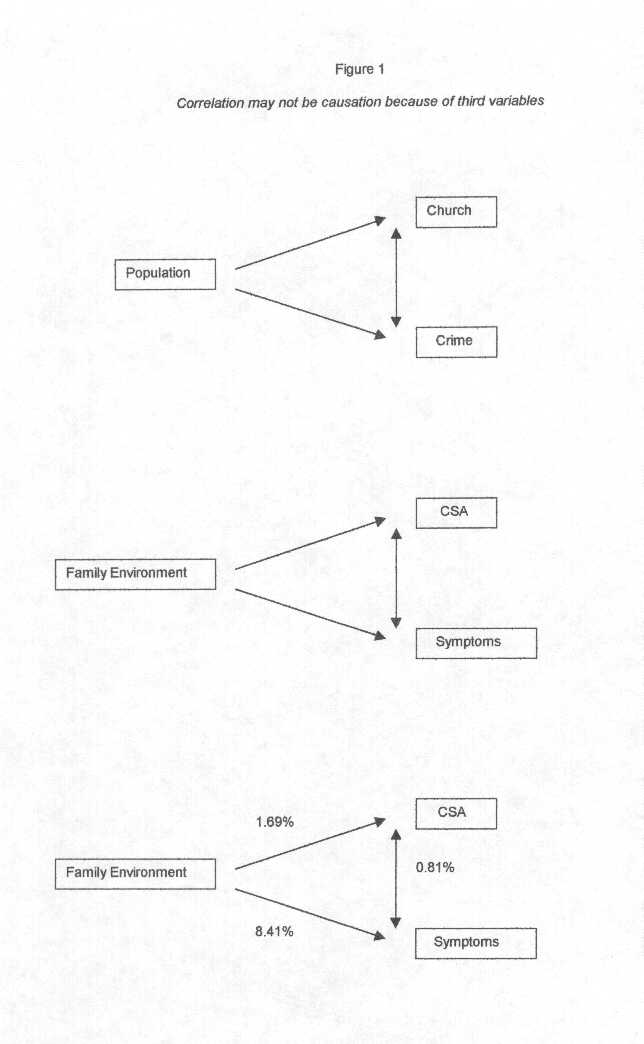
One of the most fundamental principles in scientific methodology is that correlation is not causation. That is, for example, just because race is correlated with IQ, that does not mean that race causes differences in IQ. It could be that some third variable, such as home environment or socioeconomic status, is responsible for the race-IQ association.
To illustrate this concept, let’s take this simplistic example, shown in Figure 1. As you go from small towns to small cities, to large cities, the number of churches will increase. Further, as you go from small towns to big cities, the amount of crime also increases. Does this mean that building new churches will increase crime, or tearing some down will decrease crime? No, because there’s a third variable, population, that is responsible for both. As population grows, more churches are built and more crimes occur. If we factored out population size in this example, the correlation between number of churches and amount of crime would probably disappear.
We examined the relationship between CSA and symptoms using this idea. In this case, the third variable that might be causing both is family environment. A broken home, or one containing physical abuse or emotional neglect, could predispose children or teenagers to counternormative behavior, such as using drugs or engaging in sexual activities that are classified as CSA. A broken home could also impair their adjustment. In this way, the relationship between CSA and symptoms that we found in our meta-analyses could be the result of family environment, rather than the CSA experiences.
From our previous meta-analyses, we know that for college subjects CSA accounted for 0.81% of the adjustment variability. We conducted a series of meta-analyses to determine what percent of the variability in CSA was accounted for by family environment. The result was 1.69%. We next conducted a series of meta-analyses to determine what percent of the adjustment variability was accounted for by family environment. The result was 8.41%. In other words, these results show that family environment was substantially more important in terms of being able to account for adjustment variability than CSA was -- by a factor of 10.
These results also show that CSA was indeed confounded with family environment--those who had CSA tended to come from poorer, more disorganized family settings. These findings together suggest that the statistically significant, but small relationship between CSA and adjustment may not be causal.
Thirteen of the college studies used statistical techniques to factor out, or hold statistically constant, family environment, when examining the relationship between CSA and adjustment (see Table 11). The 14 samples from these studies examined 83 CSA-adjustment relations. Before statistical control, 41% of these relations were statistically significant. After statistical control--that is, after removing the effects of family environment--only 17% were statistically significant. This represents a 59% reduction. Since CSA-adjustment relations within a given study tend to be correlated, we computed the percent reduction in statistical significance by using one overall result per study. Computed this way, the reduction in statistically significant results rose to 83%. These findings strongly support the possibility that many instances of statistically significant associations between CSA and adjustment are spurious. In particular, these findings argue against the popular assumption that CSA typically causes harm.
| Study | Type of control | Significant results |
|||
N |
Before |
After |
% reduction |
||
| Brubaker, 1999 | Separated categories | 1 |
1 |
0 |
100 |
| Cole, 1988 | Hierarch. Regression | 5 |
3 |
0 |
100 |
| Collings, 1995 | ANCOVA | 10 |
8 |
6 |
25 |
| Fromuth & Burk, 1989, mw | Hierarch. Regression | 13 |
6 |
6 |
0 |
| Fromuth & Burk, 1989, se | Hierarch. Regression | 13 |
0 |
0 |
- |
| Fromuth, 1986 | Hierarch. Regression | 13 |
4 |
1 |
75 |
| Gidycz et al., 1995 | Path analysis | 3 |
0 |
0 |
- |
| Greenwald, 1994 | Hierarch. Regression | 1 |
0 |
0 |
- |
| Harter et al., 1988 | Path analysis | 2 |
1 |
0 |
100 |
| Higgins & McCabe, 1994 | Hierarch. Regression | 2 |
2 |
0 |
100 |
| Lam, 1995 | Multiple regression | 3 |
0 |
0 |
- |
| Long, 1993 | Multiple regression | 2 |
1 |
0 |
100 |
| Pallotta, 1992 | ANCOVA | 13 |
6 |
0 |
100 |
| Yama et al., 1992 | ANCOVA | 2 |
2 |
1 |
50 |
| Totals | 83 |
34 |
14 |
59a |
|
Note. N indicates the number of symptom measures whose relation to CSA status was examined (or was intended to be by the study authors) by using statistical control. "Before" indicates the number of relations significant before applying statistical control; "After" indicates the number of significant relations after applying statistical control. "Reduction" indicates the percent of significant relations that became nonsignificant after statistical control.
a Based on the percent of total significant relations that became nonsignificant after control. The unweighted percent reduction was 83%.
Our meta-analyses of the relations between CSA and adjustment in both the national samples and college samples showed that CSA is statistically significantly related to poorer adjustment; however, this relationship is small. For boys, CSA accounted for only one half of one percent of the adjustment variability, while for girls, it accounted for only 1%. These small effect sizes are inconsistent with the assumption that CSA produces intense effects. The examination of self-perceived effects and reactions contradict the assumption that CSA has pervasive effects. Analyses of self-perceived effects, as well as the role that family environment plays in the CSA-adjustment relationship, do not support the assumption that CSA typically causes harm. There is support from these data that CSA causes harm in specific cases, but the evidence speaks against harm resulting in the typical case. Finally, a clear and strong difference emerged between how boys and girls respond to experiences classified as CSA. Only a minority of boys react negatively or feel harmed by these episodes; the reverse holds for females. In the college samples, boys who were willing participants in their CSA episodes showed no evidence of impairment, which was not the case for girls. These results strongly suggest that the assumption that boys and girls react in an equivalent manner to CSA should be abandoned.
Regarding the differences between how boys and girls react, it is worth reviewing what some of the authors of the college studies had to say. Schultz and Jones noted that males tended to see these sexual experiences as an adventure and as curiosity-satisfying, while most females saw it as an invasion of their body or a moral wrong. West and Woodhouse observed that females’ reactions at the time were "predominantly of fear, unpleasant confusion, and embarrassment...[while men’s] remembered reactions were mostly either indifference, tinged perhaps with slight anxiety, or of positive pleasure, the latter being particularly evident in contacts with the opposite sex."
These gender differences in reactions to CSA experiences are consistent with more general gender differences in response to sex among young persons.
For example, boys and girls report very different reactions to their first experience of sexual intercourse, with girls predominantly reporting negative reactions such as feeling afraid, guilty, or used, and boys predominantly reporting positive reactions such as feeling excited, happy, and mature. It is important to add that males and females may react differently to CSA because they tend to experience different kinds of CSA episodes. Baker and Duncan commented that girls in their national survey in Great Britain may have found their CSA experiences to be more damaging than boys did because they had more incestuous CSA and experienced CSA at younger ages. College males and college females also tended to have different CSA experiences; females experienced incest more than twice as often as males and experienced force about twice as often.
A few additional comments about causality are also in order. The finding that family environment was 10 times more important than CSA in accounting for current adjustment in the college population is consistent with the results of several recent studies using subjects from noncollege populations. In one study conducted by Eckenrode and his colleagues published in 1993, the researchers categorized children and adolescents obtained from a large representative community sample in a small-sized city in New York state into six groups: not abused, CSA, physical abuse, neglect, CSA and neglect, and physical abuse and neglect. They found that CSA children and adolescents performed as well in school as nonabused controls in all areas measured, including standardized test scores, school performance, and behavior. Neglect and physical abuse, on the other hand, were associated with poorer performance and more behavior problems.
In another study conducted by Ney and his colleagues published in 1994, the researchers separated their mostly clinical sample of children and adolescents into categories of CSA, physical abuse, physical neglect, verbal abuse, emotional neglect, and combinations of these. They found that the combination of abuse that correlated most strongly with adjustment problems was physical abuse, physical neglect, and verbal abuse. In the top 10 worst combinations, verbal abuse appeared seven times, physical neglect six times, physical abuse and emotional neglect five times each, whereas CSA appeared only once.
These results jive well with the conclusion of Wiesniewski that we presented before. Again, she studied 32 samples of college students across the U.S. chosen to be representative of the U.S. college population. She concluded that, when taking other forms of abuse into account, CSA was not related to adjustment problems. It was instead, she noted, maltreatment such as physical abuse that directly impacted on adjustment.
In the U.S., in 1974 the Child Abuse Prevention and Treatment Act was passed by Congress. Its original focus was on doing something about the problems of physical abuse and neglect. This initiative set up what became, as many have called it, the child abuse industry, which continues to this day and has spread to other countries around the world. Within a few years of its passage, however, the focus of this act shifted predominantly to CSA. This occurred for a number of reasons. One was that the women’s movement in America had begun raising consciousness about rape and incest in the early 1970s. A second reason was that taboo sex is much more of an emotionally-grabbing issue than physical abuse or emotional neglect. As such, CSA got more media and political attention, and eventually more funding and a much greater following in child-protection circles. The results of our research, as well as those of others just mentioned, suggest that this major shift of attention away from physical abuse and neglect to CSA may have been misdirected.
At the outset of our presentation, we discussed problems with the term child sexual abuse. It is now appropriate to return to this issue in light of the empirical findings we have just presented. These findings strongly imply that it is misleading to label both the repeated rape of a young female child in an incestuous context and a willing sexual encounter between a mature male adolescent and an unrelated adult as child sexual abuse. It is misleading because abuse implies harm to the individual.
The empirical data, based on generalizable samples, that we have presented clearly suggest that only the first of these two scenarios is likely to produce harm for the individual. The second scenario is only abuse in that it violates contemporary social norms.
What is problematic is that the use of the term child sexual abuse in the latter case, whether by the media, legislators, or mental health professionals, conveys the meaning of harm to the individual as opposed to violation of social norms. This in turn reinforces, incorrectly, the notion that the adolescent in such an episode really was harmed psychologically or emotionally. This adolescent is then perceived to be a victim and treated as a victim, which can become a self-fulfilling prophesy in that he will become the victim he is supposed to be.
The reality of labeling effects has been well established in psychology and sociology. The history of sexual attitudes provides numerous examples. Masturbation was formerly labeled "self-abuse" after the 18th century Swiss physician Tissot transformed it from a moral to a medical problem. From the mid-1700s until the early 1900s, the medical profession was dominated by physicians who believed that masturbation caused a host of maladies ranging from acne to death. So destructive was masturbation seen to be in America in the 1800s that inventors created cages with locks and keys to keep children’s hands away from their genitals, boys underwent circumcision on a wide scale so that they would not have to wash under their foreskin and thereby potentially "abuse" themselves, and physicians such as J. H. Kellogg created products such as Kellogg’s Cornflakes to prevent boys from engaging in "self-abuse."
Countless people suffered pangs of guilt for having indulged and were mortified at the possibility of developing a disease or a disorder as a result. For example, the famous sex researcher Havelock Ellis recounted the case of a respectable married woman who was involved in a social purity movement. When reading a booklet that described masturbation, she became aware that she had been unwittingly engaging in this behavior. As Ellis noted, "The profound anguish and hopeless despair of this woman in the face of what she believed to be the moral ruin of her whole life cannot be well described."
Sex researcher Alfred Kinsey complained a half century ago that the scientific classifications of sexual behavior in his day were based on theology, not biology. In 1952 in the first edition of the American Psychiatric Association's Diagnostic and Statistical Manual of Mental Disorders -- also known as DSM--sexual behaviors such as masturbation, homosexuality, fellatio, cunnilingus, and sexual promiscuity were codified as pathological--as forms of mental illness. Countless homosexuals suffered because their desires were labeled by the medical profession, and by the general public as well, as perversions. Indeed, the history of sexual attitudes shows that labeling sexual behaviors has generally been based on morality, not science, even when it is scientists rather than lay persons who are using the labels, and that labeling can have negative consequences.
In science, abuse implies that harm is likely to result from a behavior. The results for male college students who had experiences defined as CSA highlight the questionable validity of the construct child sexual abuse as defined and used in the professional literature. For these male subjects, 37% viewed their CSA experiences as positive at the time they occurred. In the two studies that inquired about positive self-perceived effects, 24% to 37% viewed their CSA experiences as having a positive influence on their current sex lives. Importantly, males who participated willingly in their CSA episodes were as well adjusted psychologically as control subjects. The positive reports of reactions and effects, along with normal adjustment for willing participants, are scientifically inconsistent with classifying these male students as having been abused. Their experiences were not associated with harm, and there appears to be no scientific reason to expect such an association. On the other hand, a minority of males did report negative reactions and negative self-perceived effects; moreover, unwanted CSA was associated with adjustment problems for them. For these students, the term abuse seems much more appropriate.
Some researchers have questioned their original definitions of sexual abuse after assessing their results. For example, Fishman defined sexual abuse of boys mostly on the basis of age discrepancies (that is, sex between a boy of 12 or less and someone at least 5 years older, or between a boy aged 13 to 16 with someone at least 10 years older), stating that age differences implied sufficient discrepancy in developmental maturity and knowledge to indicate victimization. He found that the males with CSA experiences in his study did not differ from controls on measures of adjustment and that they reported a wide range of reactions to their CSA experiences (mostly positive or neutral). In-depth interviews confirmed and elaborated the quantitative findings, leading Fishman to question his original assumptions. He noted that the men's stories altered his universal beliefs about the impact of inappropriate sexual experiences on children, and stated that "to impose a confining definition onto someone's experience does nothing to alter the realities of that experience for the person." Fishman concluded by arguing for the use of language of a more neutral nature rather than labels such as abuse, victim, and molestation--in short, for use of empirical and phenomenological criteria in conceptualizing early sexual relations, rather than using legal or moral criteria.
The foregoing discussion does not imply that the construct child sexual abuse should be abandoned, but only that it should be used less indiscriminately in order to achieve better scientific validity. Its use is more scientifically valid when early sexual episodes are unwanted and experienced negatively--a combination commonly reported, for example, in father-daughter incest. In general, findings from the review of college students suggest that sociolegal definitions of CSA have more scientific validity in the case of female children and adolescents than for male children and adolescents, given the higher rate of unwanted negative experiences for females. Nevertheless, because some women perceive their early experiences as positive, do not label themselves as victims, and do not show evidence of psychological impairment, it is important to be cautious in defining abuse for both males and females in attempts to validly understand these sexual experiences.
Before we conducted the two quantitative literature reviews that we just discussed, we conducted our own qualitative literature review. We gathered together all the studies published on boys' sexual experiences with adults based on nonclinical samples. The rationale for this research was twofold. First, previous reviewers of the literature had generally either neglected boys' sexual experiences with adults, focusing instead on those of girls, or they had just assumed that boys' experiences were the same as girls. And second, previous reviewers, when they did pay attention to boy-adult sexual experiences, focused on clinical samples. These shortcomings indicated the need to focus on boy-adult experiences, particularly in the nonclinical population. We want to emphasize once again that, to reach a valid understanding of this kind of sex, or any other kind for that matter, we cannot rely on clinical samples because of a host of problems that we discussed earlier in this presentation.
Altogether, we located 35 usable studies for analysis. Sixteen of them were based on college samples and four were based on national samples. These studies were also included in our two meta-analyses. The remaining 15 studies used samples that were obtained in a variety of ways. A few were based on community samples; others were based on responses to print advertisements; still others were based on personal contacts or referrals; one was based on responses to a computer bulletin board. These latter samples are what we call "convenience samples"--the researcher obtains whom he can through whatever means are available to him. These samples cannot be considered to be representative of the population, just as clinical samples cannot be. Nevertheless, they offer yet another opportunity to examine boy-adult sexual experiences apart from the traditional approach, which has been to focus on the clinical population.
We have already exhaustively reviewed reactions and psychological correlates from national and college samples in the meta-analyses. Here, let's move on and talk about the results from the convenience samples. The study based on a computer bulletin board revealed that 58% of males regarded their boy-adult sexual experience to have been positive, while 27% regarded it as negative. In a convenience sample from Knoxville, Tennessee, 36% of males regarded this experience as positive, 24% neutral, and 40% as negative. Sixty-six percent saw the experience as not having a negative effect on their current sex lives, while 34% did see it as having a negative effect. Another study, consisting of homosexual males recruited from sexually transmitted disease clinics, found that 58% experienced their boy-adult sexual experiences as negative. In this study, a large percent (50%) were forced in their encounter, which may account for this higher than typical figure.
In these three studies, the first and third had higher and lower rates, respectively, of positive encounters, while the second study had a profile very similar to the college samples discussed earlier. Other convenience samples have shown predominantly positive reactions. Sandfort in the Netherlands found that 24 of the 25 boys he interviewed reported predominantly positive emotions about the sexual aspects of their relationships with men.
Critics have tended to reject this study as invalid for a variety of reasons, one being that the boys were recruited into the study by their adult partners who may have had an agenda. Many of these critics have assumed the relationships had to be negative, arguing that the boys were pressured to provide positive reports. Our review of the college studies, as well as data from the other convenience samples just presented, suggests clearly that a sizable minority of boys do experience these contacts positively, which argues for the validity of Sandford's findings. The unusually high percent of positive reactions in his study probably has to do with the fact that these sexual contacts occurred within the context of a friendship. Other convenience samples on boys experiencing sex with adults in friendship relationships have yielded generally the same results. One such study was reported in England by Father Ingram; another was reported in the U.S. by the psychologist Tindall.
Child abuse researchers often provide anecdotes from case studies to vividly illustrate the "horrors of child-adult sex". For example, in the case of boys, Finkelhor in his 1979 report of his study based on a college sample noted that 38% of his boys reacted negatively, meaning that the majority, 62%, reacted positively or neutrally. Parenthetically, for experiences occurring between ages 12 and 15, Finkelhor only inquired about unwanted episodes, which undoubtedly inflated the percent of negative experiences. Finkelhor gave us no insight into the nonnegative cases, but did provide several examples of negative experiences. In one, the interviewer asked a male student to compare his boy-adult encounter with other life experiences. The student remarked: "Much more traumatic at the time. Very anxiety-producing. Probably there wasn't anything in my life as anxiety-producing." The interviewer then asked if this was the biggest trauma of his life. The student answered:
This anecdote vividly conveys what most child abuse researchers believe is a boy's typical reaction. But the numbers, even in Finkelhor's own study, show that this is not the typical reaction. In fact, there is a range of reactions.
It is important to present anecdotes that represent the other types of reactions as well to get a full picture of boy-adult experiences. Unfortunately, child abuse researchers seldom, if ever, provide us with neutral or positive anecdotes. The effect is that the noncritical reader may see that a majority reacts nonnegatively, but the vividness of the negative example sticks in their memory, biasing their perception of these relationships.
In psychology, this biasing influence is a well established phenomenon and is referred to as the vividness effect. The vividness of this memory in turn creates an illusory correlation, which means, in the present case, an exaggerated impression of the association between boy-adult sex and harm. To provide balance, we will now present a positive anecdote that comes from the nonclinical literature to give a fuller picture of how boys may react. This example comes from Tindall in 1978, who gathered 200 case studies of boy-man relations based on his interviews as a school psychologist over many decades of work. Tindall also followed up on many of these cases well into the boys' adulthood.
This anecdote stands in sharp contrast to that of Finkelhor's. It shows a willing, long-lasting sexual relationship that was part of a friendship. Rather than fearing the man, as in Finkelhor's anecdote, the boy in this case study thrived on the relationship. He modeled after the man, and successfully moved into his profession. The anecdote also shows that the boy was delinquent before meeting the man. This fits with our previous remarks that family environment, which contributes to delinquency, predisposes young persons to a host of counternormative activities, such as sex with adults.
Both of these anecdotes represent real experiences. Some boys react with fear, as in the first case. Others react with pleasure, as in the second. Many other examples of the second type could be presented coming from the other convenience samples included in our review. What is problematic is that child abuse researchers, the media, and the lay public seem to be willing to acknowledge the validity only of the former type--the negative case study. They may think this way because they feel that positive examples are so rare that either they are not genuine or, if there is some truth to them, then they can be summarily dismissed as irrelevant. But our data from a large number of samples demonstrate that positive occurrences are just as frequent as negative ones, and so both types should be acknowledged. To do otherwise is a distortion of reality. Having acknowledged that both positive and negative relations occur, the question shifts to what makes one relationship positive and the other negative.
In 1981 Constantine presented a useful model to account for these positive and negative reactions. This model holds that two key elements are critical. First is the child's or adolescent's perceived willingness in the sexual encounter. Perceived willingness means freedom to participate or to say no. Constantine concluded from his own review of the literature available at that time that this perception of willingness to participate was strongly tied to reactions: positive reactions were associated with willing encounters, negative reactions followed being forced or coerced or tricked into sex. Second is the young person's knowledge about sex. Complete ignorance could lead to anxiety during or after the episode; also, having absorbed the "conventional moral negatives" about sex -- that is, that it is bad or dirty -- could also lead to guilt or shame and other negative reactions. The results of our review of boy-adult sex based on the nonclinical literature are consistent with this model. Force and coercion in the studies we reviewed were invariably associated with negative reactions, but willing participation was not. Ignorance and a sense of shame about sex were also associated with negative reactions; but knowing about sex and not feeling ashamed about it were not.
(based on a legal sample from Gebhard et al., 1965)
| Sex and Age of Younger Person | Encouraging % |
Passive % |
Resistant % |
Number of Cases |
|
| Male | Children (< ) | 52.3 |
6.8 |
40.9 |
44 |
| Minors (12-15) | 70.3 |
11.0 |
16.5 |
91 |
|
| Female | Children (< 11) | 13.4 |
6.1 |
80.5 |
82 |
| Minors (12-15) | 69.0 |
0.7 |
30.0 |
142 |
|
(based on Constantine, 1981)
Child's Participation |
|||
| Child's knowledge | Forced | "Passive Consent" | Consensual |
| Ignorant | High anxiety Low guilt |
High anxiety Low guilt |
Moderate anxiety Low guilt |
| Aware of taboos | High anxiety Low guilt |
High anxiety High guilt |
Moderate anxiety Moderate guilt |
| Sexually knowledgeable |
High anxiety Low guilt |
Moderate anxiety Low guilt |
Low anxiety Low guilt |
| Knowledgeable and Aware of taboos |
High anxiety Low guilt |
Moderate anxiety High guilt |
Low anxiety Moderate guilt |
This issue of consent--by which we mean willingness to participate as opposed to informed consent--is important for understanding the sex differences in reactions we have described. Child abuse researchers often insist that consent is not a possibility and therefore ignore this variable. But their insistence is based on sociolegal definitions and on a focus on "informed consent," which is different. It is simple consent--the ability to say yes or no--that reliably predicts reactions, and so this is the variable that scientists should be focusing on. Before the child abuse industry developed, some researchers, however, did consider the different gradations of simple consent.
In Table 13 we see the results from a large scale study performed by the Kinsey Institute in the early 1960s. Based on court records, the researchers classified level of consent by boys and girls in sexual encounters with men as either encouraging, passive, or resistant. As you can see, there is a big sex difference for children under 12: a small majority (52%) of boys were encouraging, while very few girls (13%) were. On the other hand, twice as many girls resisted (80% vs. 40%). For minors (aged 12 to 15), a majority of male and female adolescents were encouraging (70%), but again twice as many females resisted as males (30% vs. 16%). These numbers from this legal sample are consistent with the greater willingness of boys to participate and their generally more neutral or positive reactions that have been repeatedly presented in the nonclinical literature.
The results of our reviews clearly show that the assumptions of most mental health professionals, legislators, law enforcement personnel, media workers, and the lay public that sexual relations defined as CSA cause intense harm pervasively for both boys and girls are vastly exaggerated. This exaggeration has been part and parcel of a new kind of black and white thinking that disallows shades of gray to enter. This thinking, in turn, potentiates hysterical reactions, which have been all too common in America, starting in the 1980s. One striking example involves the Satanic sex abuse hoax in child day care centers that spread across the U.S. 15 years ago. To understand the implications of a sex abuse hysteria based on vastly exaggerated beliefs about CSA, let's consider some examples.
In 1983 in Manhattan Beach, California, the mother of a two-year-old boy claimed that her son was sexually abused at the McMartin Preschool by Ray Buckey, a staff member and grandson of the owner. Over the span of the next few months, her accusations became increasingly bizarre. She claimed her son was flown in a plane to another city where there was a goatman. There, Ray Buckey flew in the air; his mother was dressed up as a witch and gave the two-year-old an enema. Staples were put into the two-year-old's ears, nipples, and tongue. Scissors were put into his eyes. Animals were chopped up; a baby's head was cut off, and the two-year-old had to drink the baby's blood.
The two year old's mother was delusional, but police and therapists showed little or no skepticism. Instead, they vigorously investigated whether other children were involved. Parents, frightened into suspecting that their children were also victims, questioned them repeatedly. Police and social workers interviewed 400 current or former McMartin children. All children denied any type of abuse initially. But the social workers pressed on until they got accusations from most of these children, which included wild stories of abduction by hooded figures, ritual mutilation of animals and babies, and sexual orgies in tunnels under the McMartin building. To evoke these accusations, the social workers made extensive use of disinformation, coercion, bribery, and modeling, among other techniques.
For examples of these techniques, and for powerful experimental evidence of their effectiveness in producing false memories, we refer you to a 1998 article by Garven and colleagues in the Journal of Applied Psychology (Vol. 83, 347-359). In the end, after two trials that lasted seven years and cost about 20 million dollars, making them America's longest and most expensive criminal trials in history, no convictions resulted. Nevertheless, Ray Buckey had to spend five years in jail before winning his freedom.
Consider these additional examples. In 1985 in New Jersey, Kelley Michaels was accused of assaulting her preschoolers with peanut butter, swords, bloodied tampons, urine, feces, and death threats. She was said to have committed these crimes against dozens of children daily, for seven months in a crowded facility without any adults seeing her and without leaving any physical evidence. The jury believed the charges; she was convicted and sentenced to nearly 50 years in prison. After spending five years in prison, her conviction was overturned.
Dale Akiki, a former San Diego Sunday-school teacher, was accused by young pupils of sacrificing rabbits, killing an elephant and a giraffe, sodomizing the children with a curling iron, putting them in a shower and altering the water between hot and cold until they vomited, sticking their heads in toilets, forcing them to ingest feces and urine, and killing a baby and making them drink its blood. As with Kelley Michaels, all this was supposed to have happened while other adults were nearby who noticed nothing. And, as with Kelley Michaels, not a scintilla of physical evidence was recovered. Yet, prosecutors put him on trial, with a conviction meaning a life sentence. He was fortunate--he was acquitted after spending only two and a half years in jail. Robert Kelly, co-owner of the Little Rascals Day Care Center in North Carolina was prosecuted on similar charges in that state's longest and most expensive criminal trial in history; he was convicted and sentenced to 12 consecutive life terms in prison. His conviction was overturned after he had spent five years in jail.
Let's consider this one last example, certainly relevant to a Dutch audience such as yourselves. One day in 1989, as he was preparing to go to work dressed up in his Burger King uniform, Bobby Fijnje--a Dutch citizen--was arrested at his home in southern Florida, accused of molesting and abusing in Satanic rituals young children for whom he baby-sat. What makes this case remarkable is that Bobby was only 14-years-old at the time--and a youngish 14-year-old at that, as revealed in photos of him at that age. In other words, Bobby was just a boy. Despite this, the police, the media, and prosecutors showed him no mercy. As Bobby later recounted, his arresting officer, Detective Martinez, told him as he was being escorted to the squad car, "Before I knew you, I knew you were guilty. But now that I see you, I definitely know that you're guilty."
The media barrage attacking Bobby was unceasing. Soon the media were telling viewers that Bobby's parents were members of an international pornography ring and that Bobby had been leading children in ghastly rituals, which involved cooking and devouring a baby. Prosecutors charged him as an adult, meaning that if he were convicted on just one of the seven charges against him, he would be sentenced to life in a maximum security prison, never eligible for parole. During the trial, prosecutors tried their best to make a monster of the boy. Their dogged determination to ensure that this boy would die of old age in prison is amply shown by the fact that they spent 3 million dollars on this trial, making it Florida's most expensive criminal trial ever.
In the end, after spending nearly two years in jail, and after enduring a trial that lasted 3 months, Bobby was acquitted of all charges. Crucial to this outcome was the testimony of Dr. Stephen Ceci, a Cornell University developmental psychologist, who did ground-breaking research demonstrating how overzealous questioners can implant false memories in children, thereby eliciting false accusations of abuse. His research since has formed the basis for reversing numerous child abuse convictions involving daycare workers around the U.S.
Responsible for this merciless assault on Bobby was Janet Reno, the chief prosecutor in southern Florida then. She was a self-styled crusader for children, who was especially concerned to prosecute sex abuse cases, believing sex abuse to be the ultimate evil and believing that children never lie about sex abuse. Her "Miami method," as it came to be called and emulated by prosecutors around the country, involved the kind of aggressive interviewing used in the McMartin case. Reno's method, however, was more apt to plant "ominous seeds in the minds of children," as a recent New York Times article was entitled, than to elicit veridical memories.
Reno personally oversaw Bobby Fijnje's prosecution. When the jury reached a verdict, Bobby had to wait a nerve-racking two and a half hours to hear it so that Reno could be present in the courtroom, presumably to take the credit for his conviction. Thanks to Ceci's testimony showing how the "child abuse experts" had corrupted the children's testimonies, Reno's trip to the courthouse that day was wasted. In a recent interview with Bobby (who is now in his 20s) shown on American television in October this year, Bobby was asked what he would say to Reno today, if he had the chance to speak with her. His answer was:
Reno has never apologized for this aggressive prosecution, or even acknowledged that it was improper in any way. Her reward for her inquisitorial zeal was to become U.S. Attorney General, the highest ranking law enforcement official in America. One month after taking this office in 1993, Reno ordered a tank and tear gas attack on a religious cult near Waco, Texas, after hearing from the FBI that sex between adults and under-aged girls was occurring. All these girls, as well as all the other cult members, died in this attack. In the end, by the way, it turned out that these FBI reports of abuse were unfounded. Reno's zeal to "save" the children yet again produced disaster.
These cases of daycare madness are just a few among many more such cases that spread throughout the U.S. in the 1980s and eventually spread to other parts of the world, including Holland. This madness centered on the vastly exaggerated view that CSA is so destructive that caution need not apply in rooting out this "evil." This hysteria was not confined to day care centers; in the later 1980s the recovered memory movement gained strength, based on the belief that CSA is so traumatic that children repress these memories in order to cope. Many therapists began probing aggressively into their patients' childhood, searching for hidden memories of CSA, that they believed were the cause of all their patients' psychological problems. Using the same coercive techniques used in the day care center investigations, these therapists implanted false memories in many a vulnerable patient. Adult patients then turned around and accused and then often sued their parents, ripping families apart. As it turns out, there is no science behind the recovered memory idea, just passion driven by exaggerated beliefs about CSA.
From a psychological perspective, it is documented that children in the day care centers in whom false memories of being raped in tunnels and sodomized by curling irons were implanted developed various pathological symptoms in the clinical range after, not before, the interrogations by the child protection workers began. It is also well documented that many a patient in recovered memory therapy got worse, not better, after this treatment began. These pathological responses in the interrogated children and the patients in treatment clearly reflect the effects of the intervention. What makes matters even worse is that researchers in the child abuse industry have seized upon these newly developed symptoms as further evidence for the pathogenicity of CSA.
In closing, we want to emphasize that our presentation should not be taken to advocate behaviors labeled as CSA. But we also want to emphasize that exaggeration of the nature of CSA is unacceptable, because it can and has substantially aggravated the problem. It is imperative that social discourse on behaviors labeled CSA be rationally based, rather than emotionally driven. Otherwise, problems of the types just discussed may continue to occur. As the social critic Goya observed in one of his sketches, "El sueño de la razon produce monstruos," or, "The sleep of reason produces monsters."